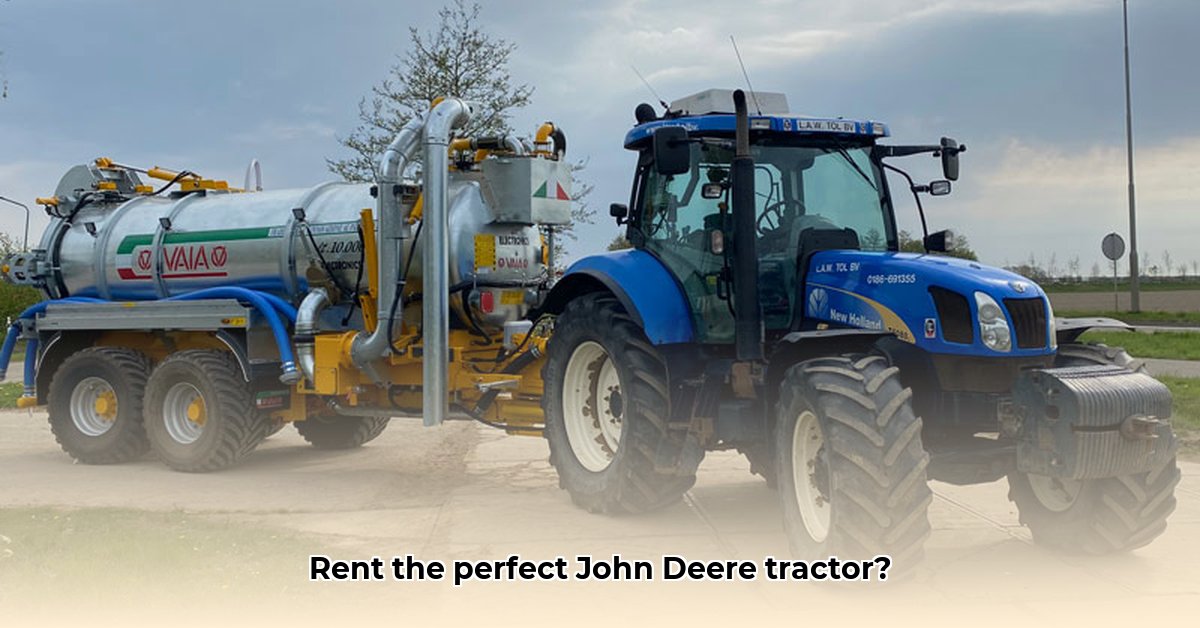
Finding the right tractor rental can be challenging. This guide simplifies the process, focusing on John Deere's range of rental tractors and offering practical advice for farmers and rental companies. For a helpful size comparison, check out this tractor size chart.
John Deere Tractor Overview: Models for Every Need
John Deere offers various models, catering to different farm sizes and operations. From compact tractors ideal for smaller plots to powerful machines suited for large-scale operations, there's a John Deere tractor to meet your requirements.
| Model | Horsepower (approx.) | Transmission | Key Features | Ideal Use |
|---|---|---|---|---|
| 5058E | 58 | PowrQuad | Compact, easy to operate, reliable | Smaller farms, hobby farms, light agricultural work |
| 6R 250 | 250 | AutoPowr Vario | High power, advanced technology, comfort features | Large farms, heavy-duty tasks, extensive acreage |
Note: Horsepower may vary based on configurations. Always confirm specifications with your rental provider. Transmission type significantly impacts performance and ease of use. The 6R’s AutoPowr Vario offers smoother operation than the 5058E's PowrQuad.
Rental Market Analysis: The Growing Trend
Tractor rental is increasingly popular due to several factors. Have rising fuel costs and fluctuating crop prices made you reconsider tractor ownership? Renting offers:
- Flexibility: Rent only when needed, ideal for seasonal work.
- Cost Savings: Avoid high initial investment and ongoing maintenance expenses.
- Access to Technology: Utilize advanced features without significant financial commitment.
- Reduced Risk: Minimize risks associated with ownership, such as repairs and depreciation.
Don't let financial concerns limit your farming potential. Explore the efficient alternative of a tractor rental.
Choosing the Right Tractor: A Step-by-Step Guide
Selecting the right tractor involves several key considerations:
1. Assess Your Needs:
- Farm Size (Acres): This directly influences the required horsepower and tractor size.
- Crop Type: Different crops demand different machinery and power levels.
2. Budget Wisely:
- Rental Costs: Obtain multiple quotes and compare prices, considering factors like rental duration, insurance, and fuel costs.
3. Consider Experience:
- Operator Skill: Beginners should choose user-friendly models; experienced operators can handle more advanced features.
4. Explore Advanced Features:
- GPS Auto-Steering: Improves efficiency and reduces overlap.
- Climate-Controlled Cab: Increases operator comfort during long working hours.
- Advanced Hydraulics: Enhances versatility and operational efficiency. Weigh the cost of these features against their potential benefits.
Risk Management: Potential Challenges and Mitigation
While renting offers advantages, potential challenges must be addressed:
- Mechanical Breakdowns: Choose a reputable rental provider with a strong maintenance program and readily available parts. Regular inspections are key.
- Supply Chain Delays: Select a provider with a proven track record of timely parts procurement.
- Regulatory Compliance: Confirm the tractor meets all environmental and safety regulations.
Mitigation Strategies:
- Thorough Inspection: Document any pre-existing damage before use.
- Insurance Coverage: Secure comprehensive insurance to protect against unexpected losses.
- Operator Training: Ensure proper training to prevent accidents and maximize efficiency.
- Preventative Maintenance: Schedule regular maintenance checks to identify and address potential issues early on.
Conclusion: Maximize Your Farming Potential
Renting a John Deere tractor provides flexibility and cost-effectiveness. By carefully assessing your needs, managing your budget, and understanding potential risks, you can select a tractor that aligns with your operational requirements. Choosing a reputable rental provider is paramount for a successful and productive farming season. What are your top priorities when selecting a tractor rental?